
Non-Stick Roll Covers That Eliminate Buildup and Downtime
Industrial non stick roll covers for manufacturing equipment.
Fluoron non stick roll covers are heat shrink fluoropolymer covers for industrial rollers used in paper, film, food, converting, and adhesive processing equipment. These are not clear book covering rolls, contact paper, or consumer kitchen products. Fluoron is a US manufacturer of industrial roller covers since 1990, a Spectrum Advanced company.
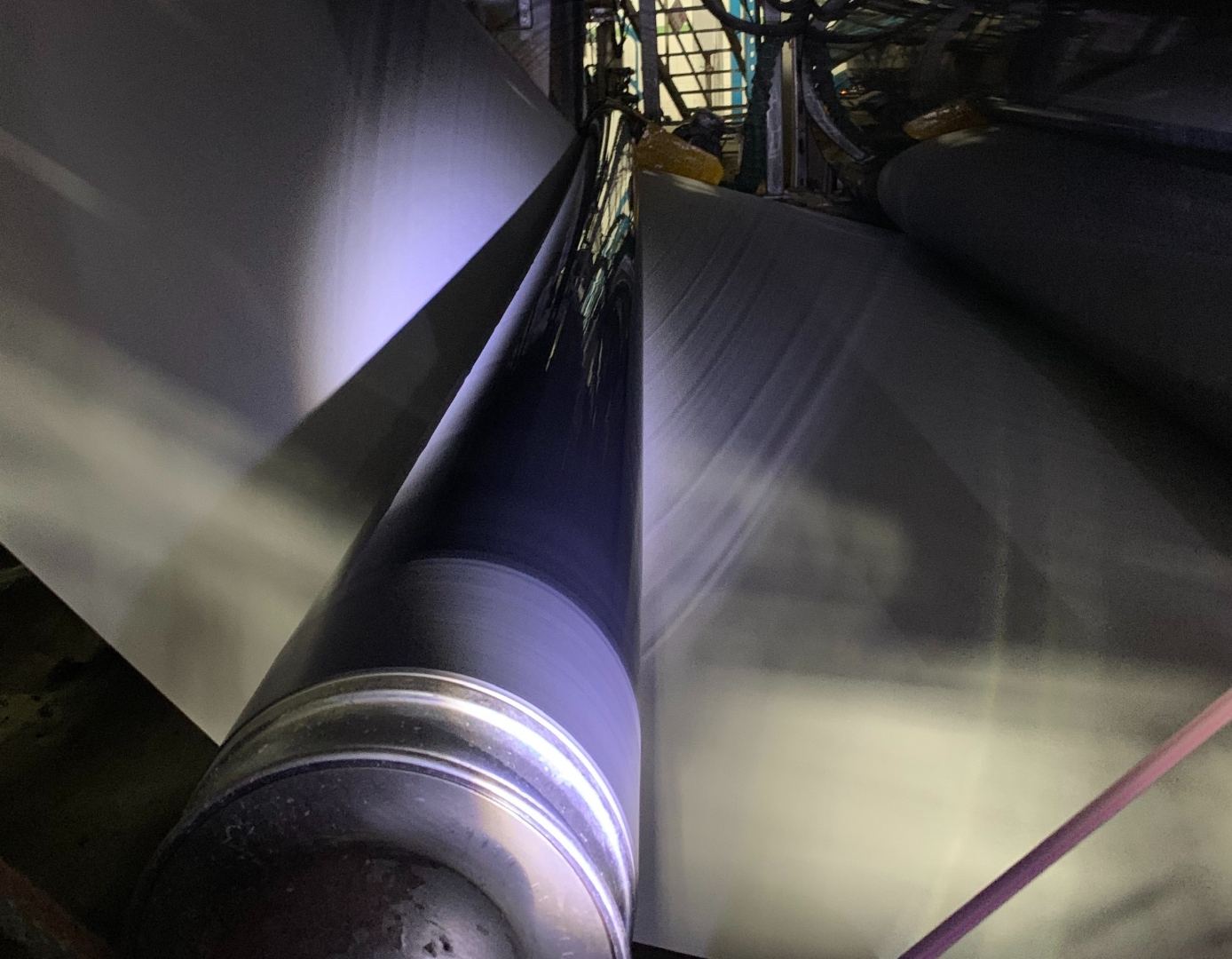
Production lines stop when rollers accumulate adhesive, ink, starch, fiber, or scale. Cleaning takes time. Re-grounding takes skill. And every hour a machine is down costs margin. Fluoron's heat-shrink fluoropolymer roll covers create a permanent non-stick barrier on any roller substrate — metal, rubber, fiberglass, or composite — so residue cannot grip, corrosion cannot penetrate, and your line keeps running.
Patented PTFE capability: Fluoron offers patented heat-shrink PTFE roll cover technology, a capability not broadly available from other roll-cover suppliers.
Fabricated in the USA from virgin-grade FEP, PFA, and PTFE resins, Fluoron non-stick roll covers are engineered to the exact diameter and length of your rollers, available bonded or unbonded, with or without anti-static properties.
How Heat-Shrink Roll Covers Work
A heat-shrink roll cover is an expanded-diameter fluoropolymer tube that slides over your roller face and is shrunk to a tight, uniform fit by applying regulated heat. The physics are straightforward: the tube was extruded or formed at its natural diameter, then expanded radially during manufacturing. When heat is reapplied during installation, it returns toward its original size — conforming tightly to the roller's surface.
The result is a continuous, seamless (or precision-welded) fluoropolymer surface with:
- Near-zero surface energy — adhesives, inks, starches, and resins cannot form a durable bond
- Broad chemical resistance — impervious to virtually all solvents, acids, and processing chemicals
- High-temperature tolerance — depending on material, rated to 350°F (FEP), 400°F (PFA), or 500°F (PTFE)
- Corrosion protection — eliminates pitting and oxidation on metal roll cores
Unlike PTFE spray coatings, a heat-shrink cover can be removed and replaced when worn — no off-site regrinding required in most cases.
Fluoron's Four Non-Stick Cover Grades
Fluoron engineers roll covers in four material grades, each suited to a specific operating window:
Fluoro-Clear (FEP)
The most widely used roll cover material. Transparent, which allows visual inspection of adhesive bonding during installation. Available seamlessly for rollers up to 18" OD. Best for low-to-moderate wear positions: guide rolls, conveyor rolls, spreader rolls, idler rolls. Operating temperature up to 350°F; PLI up to 75.
Fluoro-Flex (PFA)
Similar chemistry to FEP with meaningfully higher thermal stability, greater flex fatigue resistance, and improved wear life — roughly 4× that of FEP under equivalent conditions. Available seamlessly up to 18" OD. Best for rubber nip rolls (EPDM, silicone, Hypalon) running high compression force in laminating, converting, and extrusion lines. Operating temperature up to 400°F.
Fluoro-Wear (PTFE)
PTFE's abrasion resistance is approximately 10× that of FEP. Opaque, always seamed (PTFE cannot be extruded as a tube), available from 5" OD with no upper limit. Best for felt rolls, press rolls, and any position with moderate-to-high abrasion. Operating temperature up to 500°F.
Conductive PTFE
Identical wear performance to Fluoro-Wear, with the addition of conductive carbon filler that dissipates static charge. The critical choice for dry-area rolls where FEP or standard PTFE covers generate electrostatic buildup that damages product or creates fire/shock risk. Surface resistance: 10⁶–10⁹ ohms/square. Operating temperature -76°F to 500°F.
Industries Served
| Industry | Typical Roll Position | Cover Grade Recommended |
|---|---|---|
| Pulp & Paper | Dryer cans, press rolls, felt rolls, couch rolls | Fluoro-Wear (PTFE) or Fluoro-Flex (PFA) |
| Printing (Offset/Flexo/Gravure) | Nip rolls, ink rolls, guide rolls | Fluoro-Clear (FEP) or Fluoro-Flex (PFA) |
| Laminating & Converting | Rubber nip rolls, pressure rolls | Fluoro-Flex (PFA) |
| Packaging | Spreader rolls, idler rolls, conveyor rolls | Fluoro-Clear (FEP) |
| Food Processing | Conveyor rolls, transfer rolls | Fluoro-Clear (FEP) — FDA-compliant resin |
| Textile / Nonwovens | Bowed rolls, banana rolls, spreader rolls | Fluoro-Clear (FEP) or Fluoro-Stat |
| Extrusion | Chill rolls, pull rolls | Fluoro-Flex (PFA) |
| Film Processing / Coating | Idler rolls, coating rolls | Fluoro-Stat (if static risk) |
The Business Case — ROI of Switching to Non-Stick Roll Covers
The cost of a fluoropolymer roll cover is typically recovered within one or two cleaning cycles eliminated. Consider a mid-size paper machine where a single sheet break and cleanup takes 45–90 minutes. With a non-stick covered press roll:
- Sheet breaks caused by picking are significantly reduced — non-stick surface prevents fiber adhesion
- Cleaning intervals extend dramatically — instead of daily wipe-down, a covered roll may run weeks between cleans
- Roll regrinding intervals extend — the cover protects the metal face from pitting and corrosion
- Downtime for cover replacement is minutes, not hours — field-installable sleeves require no machining
Beyond direct labor and downtime savings, non-stick covered rolls improve product quality: fewer rejects from ink offset, adhesive contamination, and web breaks all translate to better yield per run.
Custom Fabrication — No Standard Shelf Size Limits
Fluoron fabricates roll covers to your roller's exact measurements:
- Diameter: Any OD — seamless FEP/PFA up to 18"; all larger diameters and all PTFE via precision weld seam
- Length: Custom face lengths to match your roll
- Wall thickness: Standard 0.020" (0.5 mm) and 0.060" (1.5 mm); other thicknesses on request
- Bonding method: Bonded (etched + adhesive) or unbonded (slip fit)
- Seam or seamless: Seamless for small/medium rollers; smooth-finish seam for large-diameter or PTFE
All sleeves are fabricated from virgin-grade fluoropolymer resin. Fluoron does not use regrind or repurposed material.
Installation Options — Field, Shop, or Customer-Trained
Fluoron supports three installation models to match your operational structure:
- Fluoron on-site installation: A Fluoron technician comes to your facility and installs covers with minimal roll removal, often during a scheduled maintenance window.
- Fluoron shop installation: Rollers are shipped to Fluoron's facility in Elkton, MD for precision installation and return.
- Customer self-install with Fluoron training: For operations with on-site maintenance capability, Fluoron provides installation training and technical support. FEP sleeves on non-bonded applications are the most straightforward for customer-installed applications.
What to Send Fluoron for a Quote
To specify the right cover and price accurately, Fluoron needs:
- Roll substrate (steel, aluminum, rubber type, fiberglass)
- Roll OD and face length (both in inches or mm)
- Operating temperature (average and maximum)
- Nip pressure in PLI (pounds per linear inch)
- Environment: wet or dry; any chemicals present
- Application description and what material the roll contacts
- Current cover type (if any) and why it is failing
Application Selection Quick Reference
| Condition | Recommended Action |
|---|---|
| Temperature below 350°F, light wear | Fluoro-Clear (FEP) — most economical |
| Rubber nip roll, high compression | Fluoro-Flex (PFA) — superior flex fatigue resistance |
| High abrasion, felt/press roll | Fluoro-Wear (PTFE) — 10× wear life vs. FEP |
| Dry-area roll, static discharge events | Conductive PTFE — eliminates static arcing |
| Diameter over 18" | Any grade via fluoropolymer weld seam |
| Food-contact application | FEP or PFA — FDA-compliant virgin resin |
| Need visual bond inspection during install | Fluoro-Clear (FEP) or Fluoro-Flex (PFA) — transparent |
Frequently Asked Questions
What is the difference between a roll cover and a roll coating?
A roll cover (or sleeve) is a removable, mechanically fitted fluoropolymer tube. A coating is a spray or dip-applied layer that is bonded permanently to the roll face. Covers are replaceable without machining the roll; coatings require the roll to be stripped, reground, and recoated when worn. For most industrial roller applications, a heat-shrink cover offers lower total cost of ownership and faster turnaround.
Can non-stick covers be applied over a rubber roll?
Yes — PFA (Fluoro-Flex) is specifically designed for rubber substrates including EPDM, silicone, and Hypalon. It requires surface etching of the sleeve and adhesive bonding. FEP (Fluoro-Clear) can also be bonded to rubber for lower-pressure applications.
How do I know whether to use FEP, PFA, or PTFE?
The primary factors are operating temperature, nip pressure (PLI), abrasion level, and whether static is a concern. Fluoron's [material comparison page](/fep-vs-pfa-vs-ptfe/) covers this in detail, and our application engineers can make a specific recommendation based on your process parameters.
What roller substrates can be covered?
Steel, aluminum, fiberglass, composite, and rubber-covered rolls (EPDM, silicone, Hypalon). Even wood rollers can be covered for low-temperature, low-pressure applications.
Will the seam on a welded sleeve affect performance?
Fluoron's fluoropolymer weld seam is engineered to match the strength of the base material. The seam is smooth-finished and in most roll cover applications does not affect nip uniformity or surface release. For precision printing applications where absolute surface uniformity is required, a seamless sleeve (FEP or PFA up to 18" OD) may be preferred.
CTA Block
Ready to Eliminate Roller Buildup for Good?
Fluoron engineers will review your roller specifications and recommend the right cover grade, thickness, and installation method. No obligation.
Get your custom quote:
Flexible packaging and converting
For film, adhesive, web handling, and distributor roll problems
Flexible packaging teams and their distributors often need heat shrink Teflon sleeves, Teflon roll covers, or non-stick roll covers when adhesive pickup, web breaks, wrap-ups, and repeated cleaning stops start controlling line speed. Fluoron helps convert that line problem into a sleeve specification for FEP, PFA, PTFE, or conductive PTFE.
Wear-service proof
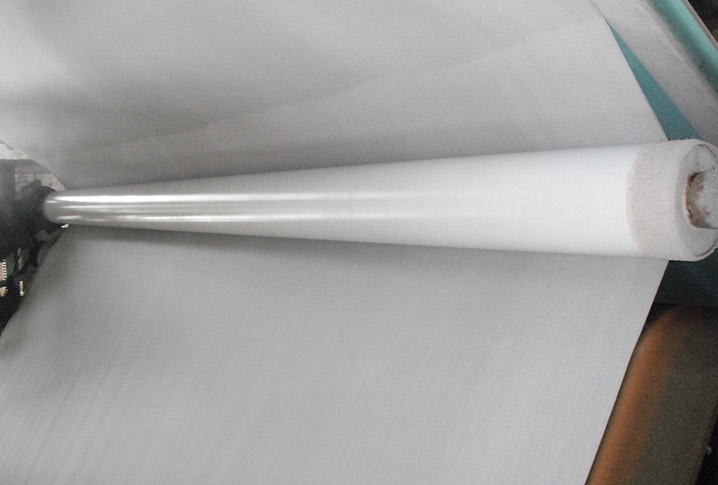
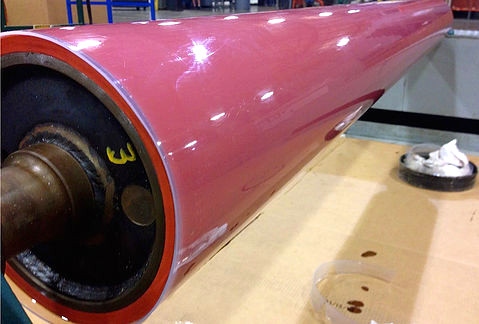
Fluoro-Wear options for demanding roller positions.
Sleeve questions
Common questions about Fluoron sleeves and roll covers
What size rollers can Fluoron cover?
Fluoron builds custom heat-shrink fluoropolymer sleeves and roll covers to match the roller dimensions you provide. Send the roll diameter, face length, journal details if relevant, and any space limitations so our team can confirm the right sleeve path.
What types of rollers can be covered?
Fluoron sleeves are commonly considered for steel, aluminum, rubber, composite, fiberglass, guide, idler, spreader, nip, chill, calender, and other industrial rollers where sticking, buildup, wear, static, or corrosion is affecting production.
What are the operating temperatures?
The correct temperature range depends on the selected material. FEP, PFA, and PTFE, including conductive PTFE each behave differently under heat, pressure, and chemical exposure. Share your operating temperature and line conditions and Fluoron will help confirm the best fit.
Who installs the sleeves?
Fluoron offers installation support on-site or in our shop. Once trained by Fluoron, many customers can complete repeat installations themselves. The best installation path depends on roller size, bonding requirements, outage timing, and site access.
What industries use non-stick sleeves?
Fluoron sleeves are used in pulp and paper, flexible packaging, converting, laminating, printing, food processing, plastics, rubber, textiles, and other industrial lines where a roller surface needs clean release, chemical resistance, wear resistance, or static control.
How long will a Fluoron sleeve last?
Service life depends on material selection, pressure, temperature, chemistry, line speed, abrasion, and cleaning practices. Fluoron helps match FEP, PFA, PTFE, or Fluoro-Stat to the application so the sleeve is specified for the conditions it will actually see.
A Spectrum Advanced technology platform
Fluoron is the sleeve division of Spectrum Advanced. Together with Radiant Cleaning and AEGIS Advanced Coatings, we help industrial teams solve sticking, buildup, corrosion, wear, and downtime problems across rollers, process equipment, and critical production assets.