
Flexible packaging roll covers
Non-Stick Roll Covers for Flexible Packaging Lines
If film, adhesive, ink, resin, or coating buildup is slowing your flexible packaging line, Fluoron helps you specify heat-shrink Teflon-style fluoropolymer sleeves and non-stick roll covers that release cleanly and keep web handling predictable.
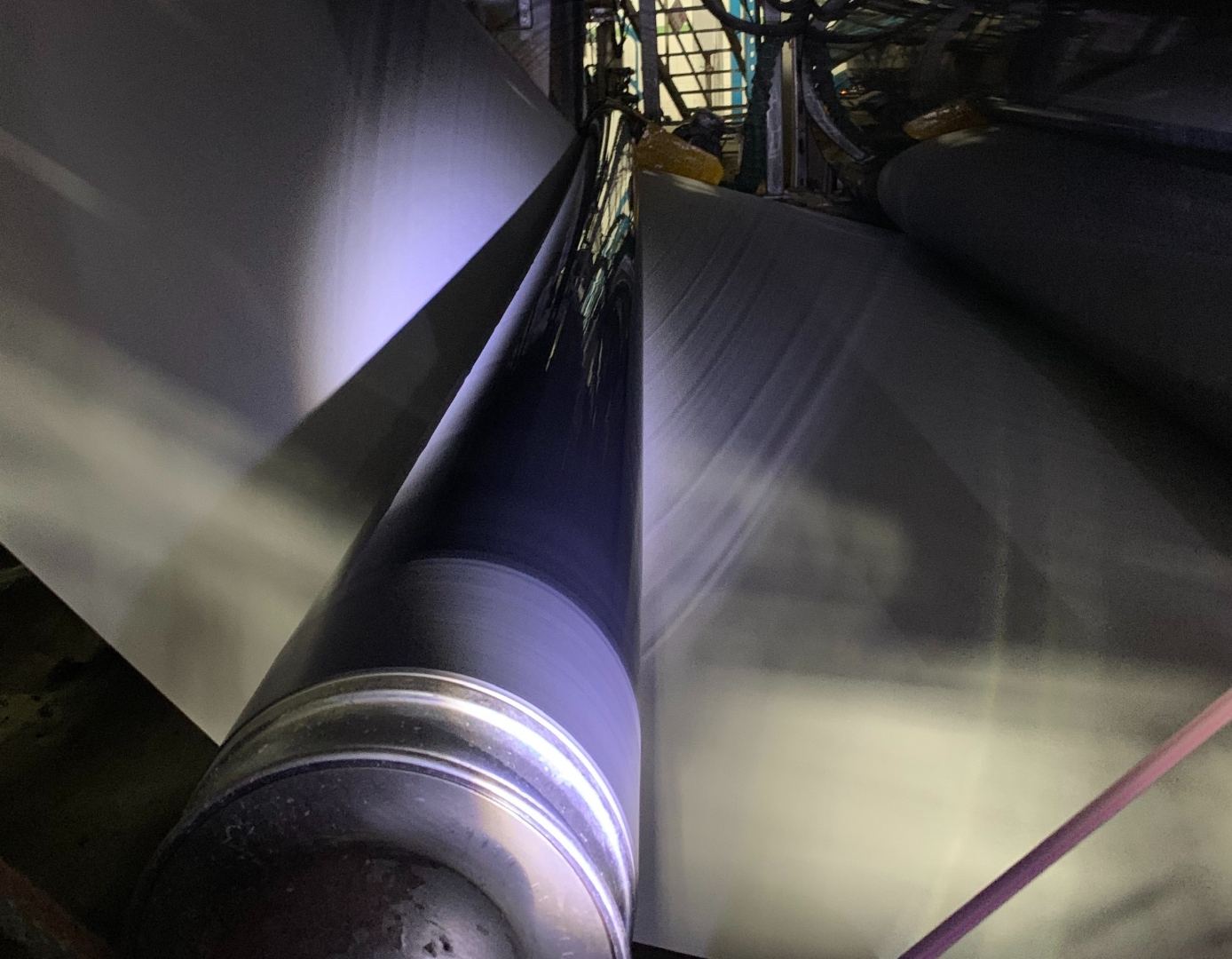
When film or adhesive starts controlling the line, the roll surface is part of the problem.
Flexible packaging teams often search for non-stick roll covers after they see the same problems repeat: adhesive pickup at a nip, film tracking trouble, web breaks, wrap-ups, uneven release, or cleaning stops that crowd out preventive maintenance. A heat-shrink fluoropolymer roll cover gives the roller a low-surface-energy barrier so product cannot grip the roll face as easily.
If you are seeing this, call Fluoron
- Film or adhesive grabbing at nip, chill, guide, idler, or spreader rolls
- Wrap-ups or web breaks that force operators to slow the line
- Cleaning cycles that keep returning on the same roller positions
- Rubber roll surfaces swelling, wearing, or holding residue
- Static risk on dry-area web handling positions
- Distributors or OEMs needing a repeatable sleeve option for customer roll problems
Heat-shrink Teflon sleeves vs. spray coatings for packaging rollers
Many buyers search for “heat shrink Teflon sleeves” or “Teflon roll covers” because they need a replaceable non-stick surface, not just a coated roller. Fluoron manufactures independent FEP, PFA, and PTFE fluoropolymer sleeves, including conductive PTFE options for industrial rollers. Teflon® is a Chemours trademark, but the search intent is clear: buyers want a low-friction fluoropolymer surface that can survive production conditions.
| Need on the line | Recommended Fluoron path | Why it helps |
|---|---|---|
| Adhesive release on guide/idler rolls | Fluoro-Clear FEP or Fluoro-Flex PFA | Low surface energy helps reduce product grip and cleanup frequency. |
| Higher wear or pressure | Fluoro-Wear PTFE or bonded PFA | Better durability for demanding nip, felt, or contact positions. |
| Static control in dry web handling | conductive PTFE | Combines release with a conductive pathway for static-sensitive positions. |
| Distributor/OEM repeatability | Custom sleeve specification | Repeatable dimensions, material selection, and installation guidance. |
Built for flexible packaging, converting, laminating, and printing
Fluoron sleeves support rollers used around adhesive-coated films, laminating nips, printing and converting lines, web handling sections, guide rolls, spreader rolls, and other positions where sticking or buildup disrupts quality. The correct material depends on temperature, pressure, roll substrate, chemicals, line speed, and whether the cover should be bonded or unbonded.
For distributors and OEMs
If you support packaging, converting, or web-handling customers, Fluoron can help you translate a recurring roll-surface problem into a sleeve specification. We can quote custom sizes, recommend FEP vs. PFA vs. PTFE, and help your customer understand installation requirements before the next outage or rebuild window.
What to send for a packaging roll review
- Roll diameter and face length
- Roll material: rubber, steel, aluminum, composite, or fiberglass
- Line function: nip, chill, idler, spreader, guide, laminating, printing, or coating
- What is sticking or building up
- Operating temperature, pressure, speed, and whether the environment is wet or dry
- Any distributor, OEM, or customer specification requirements
Frequently asked questions
Do non-stick roll covers help reduce flexible packaging wrap-ups?
They can help when wrap-ups are caused by product adhesion, adhesive pickup, or residue buildup on the roll surface. Fluoron reviews the roll position, material contact, temperature, pressure, and cleaning history before recommending FEP, PFA, PTFE, or Fluoro-Stat.
Are these the same as Teflon roll covers?
Buyers often use “Teflon roll covers” to describe fluoropolymer roll covers. Fluoron manufactures independent FEP, PFA, PTFE, and conductive PTFE sleeves; Teflon® is a registered trademark of The Chemours Company.
Can Fluoron support distributors?
Yes. Fluoron can help distributors and OEMs specify custom heat-shrink fluoropolymer sleeves for customer roll problems, including dimensions, material selection, bonding method, and installation guidance.
Have a film, adhesive, or web-handling roll problem?
Send the roll dimensions and what is happening on the line. Fluoron will help you identify the right sleeve path.
Get a Packaging Roll Review
Tell us about the roll position, material, and what is sticking or wrapping up.
Sleeve questions
Common questions about Fluoron sleeves and roll covers
What size rollers can Fluoron cover?
Fluoron builds custom heat-shrink fluoropolymer sleeves and roll covers to match the roller dimensions you provide. Send the roll diameter, face length, journal details if relevant, and any space limitations so our team can confirm the right sleeve path.
What types of rollers can be covered?
Fluoron sleeves are commonly considered for steel, aluminum, rubber, composite, fiberglass, guide, idler, spreader, nip, chill, calender, and other industrial rollers where sticking, buildup, wear, static, or corrosion is affecting production.
What are the operating temperatures?
The correct temperature range depends on the selected material. FEP, PFA, and PTFE, including conductive PTFE each behave differently under heat, pressure, and chemical exposure. Share your operating temperature and line conditions and Fluoron will help confirm the best fit.
Who installs the sleeves?
Fluoron offers installation support on-site or in our shop. Once trained by Fluoron, many customers can complete repeat installations themselves. The best installation path depends on roller size, bonding requirements, outage timing, and site access.
What industries use non-stick sleeves?
Fluoron sleeves are used in pulp and paper, flexible packaging, converting, laminating, printing, food processing, plastics, rubber, textiles, and other industrial lines where a roller surface needs clean release, chemical resistance, wear resistance, or static control.
How long will a Fluoron sleeve last?
Service life depends on material selection, pressure, temperature, chemistry, line speed, abrasion, and cleaning practices. Fluoron helps match FEP, PFA, PTFE, or Fluoro-Stat to the application so the sleeve is specified for the conditions it will actually see.
A Spectrum Advanced technology platform
Fluoron is the sleeve division of Spectrum Advanced. We help packaging, converting, paper, and industrial teams solve sticking, buildup, static, wear, and downtime problems.