
Fluoro-Stat 102
Fluoro-Stat 102 vs. FEP roll covers
Short answer: FEP is a good, low-cost non-stick sleeve for low-wear rolls. Fluoro-Stat 102 is a reinforced, graphite-filled PTFE sleeve for the tough spots. It wears up to 10 times longer than FEP, handles 500°F instead of 400°F, and conducts static away so it doesn’t arc.
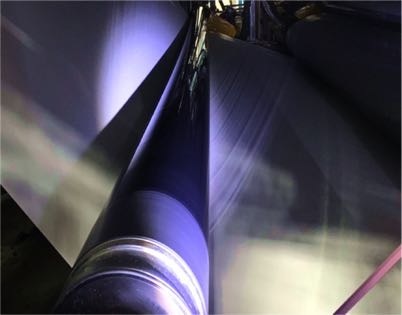
Side by side
| FEP sleeve | Fluoro-Stat 102 | |
|---|---|---|
| Material | FEP | Reinforced, graphite-filled PTFE |
| Wear resistance | Baseline | Up to 10X FEP |
| Max working temperature | 400°F (204°C) | 500°F (260°C) |
| Static | Insulator. Builds charge and can arc | Conductive, 107–109 ohms. Drains static to ground |
| Flex fatigue | Good | Better |
| Release | Excellent | Excellent |
| Look | Clear | Black |
| Roll size | Seamless up to 18" diameter | 5" diameter and up, welded seam |
| Thickness | 0.020" or 0.060" | 0.060", etched for bonding |
| Best for | Low-wear guide and conveyor rolls in wet areas | Dry end, high speed, canvas, felt and spreader rolls |
10 times the wear life
FEP is soft. In abrasive positions it wears through, and once the sleeve is gone the roll starts picking up buildup again. Fluoro-Stat 102 is made from reinforced PTFE, so it holds up far longer under the same conditions.
Mass lost after 42 hours of abrasion (lower is better)
At 25°C
At 110°C
Proven on canvas rolls
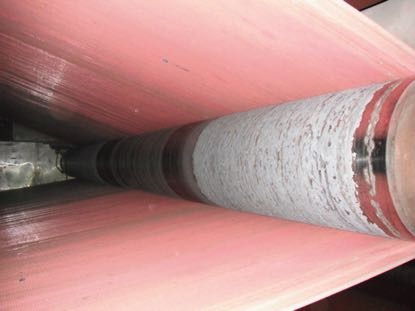
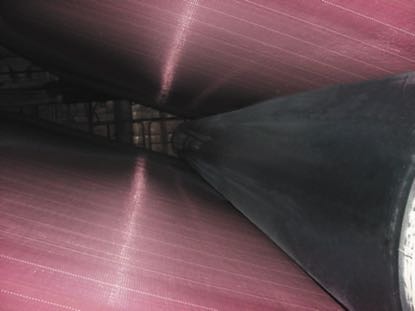
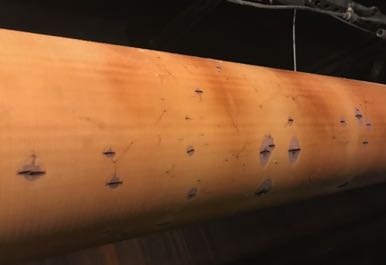
Canvas and felt rolls are some of the hardest positions on a machine. Here’s a canvas roll loaded with buildup, and the same position after a Fluoro-Stat 102 cover.
The static problem with FEP
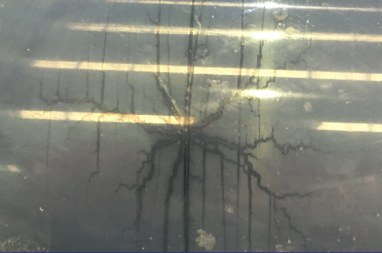
In dry positions, FEP causes a problem of its own. It’s an insulator, so it picks up charge from the sheet or felt and holds it until it finds a path to ground. Then it arcs. That shocks people, creates a spark risk around flammables, causes sheet defects and burns tracks into the sleeve.
Fluoro-Stat 102 is filled with graphite and built with a conductive underlayer. At 107–109 ohms it bleeds static off to the grounded roll before it can build up. For the science behind it, see our stickies and static guide.
- Eliminates static shocks to operators
- Lowers the risk of sparks near flammables
- Cuts sheet defects caused by discharge
Where it runs
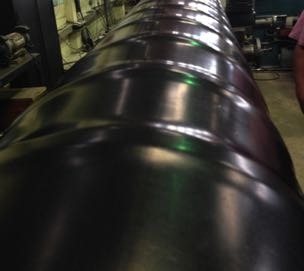
Dry end and high-speed paper rolls, canvas and felt rolls, spreader and worm rolls, and static-prone rolls on converting, film, packaging and laminating lines.
When FEP is the better pick
FEP still makes sense for low-wear guide and conveyor rolls in wet areas where static isn’t an issue. It costs less, it’s clear so you can see the install, and it’s seamless on rolls up to 18". See FEP vs. PFA vs. PTFE for the full picture.
Common questions
Is Fluoro-Stat 102 better than FEP?
For dry, high-speed or abrasive positions, yes. It wears up to 10 times longer, runs to 500°F instead of 400°F and drains static. For low-wear rolls in wet areas, FEP is cheaper and works fine.
Why does an FEP sleeve cause static?
FEP is an insulator. As paper or a felt runs over it, the sleeve picks up electrons and holds the charge until it arcs. That can shock operators, mark the sheet and burn tracks into the sleeve.
How conductive is Fluoro-Stat 102?
107 to 109 ohms. That’s conductive enough to bleed charge off to the grounded roll while keeping a non-stick PTFE surface.
What size rolls can you cover?
Rolls 5" in diameter and larger, any face length.
Where is it installed?
At our shop, where the sleeve is bonded and then ground and polished on a lathe for a clean finish.
How long does it last?
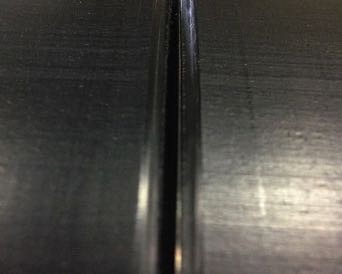
It depends on the position. One Fluoro-Stat 102 cover on a spreader roll was still running with a mirror finish after more than three years.
Fluoro-Stat conductive PTFE roll covers · Anti-static roll covers · Download the PDF
Sleeves wearing out or arcing?
Tell us the roll and the position. We’ll tell you if Fluoro-Stat 102 is worth it, and we can send sample coupons to test.