
Heat-shrink fluoropolymer roll covers for industrial rollers.
FEP, PFA, PTFE, and conductive PTFE.
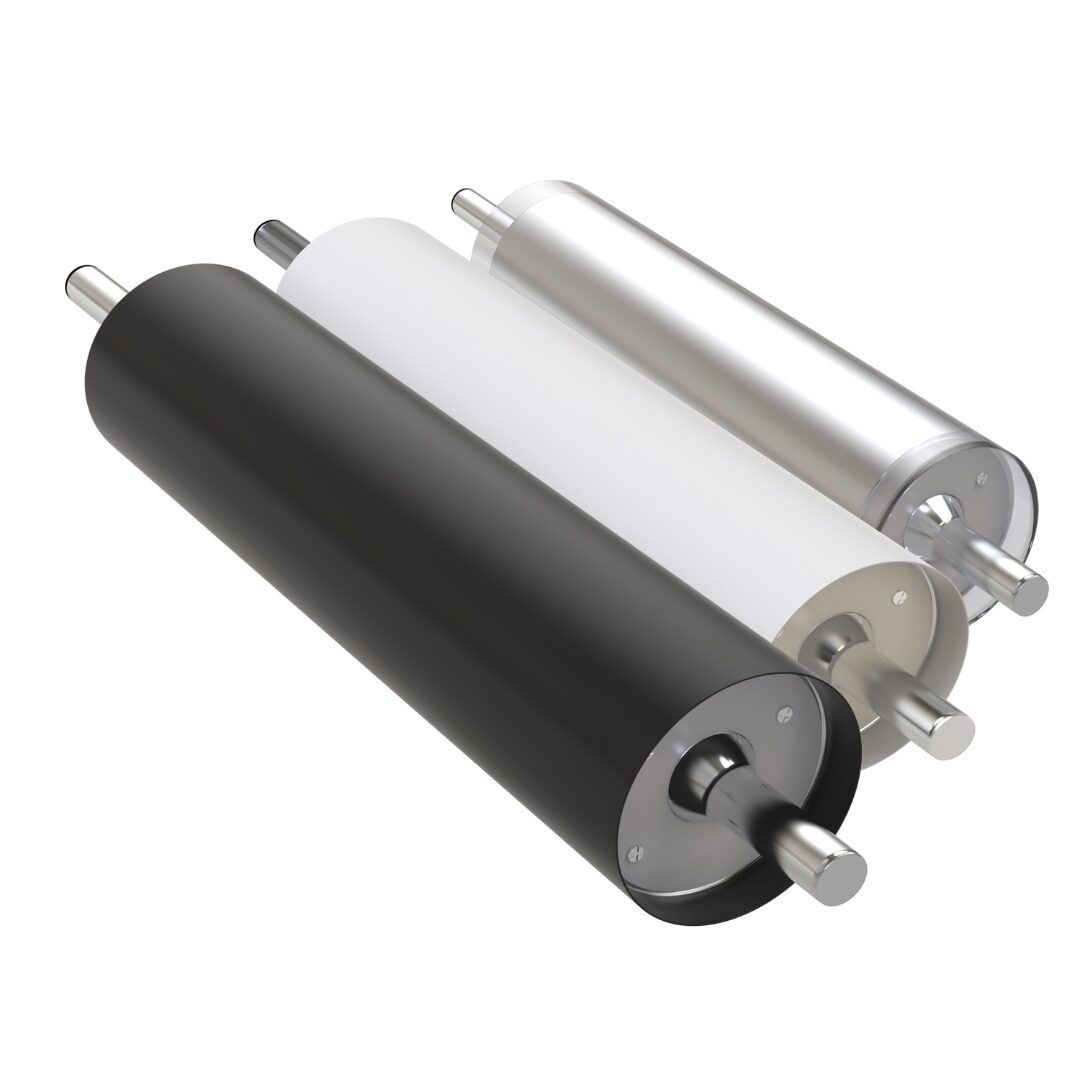
Spectrum Advanced’s Fluoron division engineers heat-shrink fluoropolymer sleeves that recover onto the roll body and deliver a non-stick, chemically resistant, dimensionally stable surface. One install method, four fluoropolymer families — sized to the roll position and the failure pattern it has to solve.
Also known as heat shrink roll covers, heat shrink Teflon™ roll covers, fluoropolymer roll sleeves, and non-stick roll covers.
Send the roll position, OD, face length, service temperature, and the failure pattern you are trying to solve. Fluoron engineering responds within one business day.
Spec my roll cover →What heat-shrink fluoropolymer roll covers are — and what they replace
Teflon™ is a trademark of Chemours. Fluoron products are fluoropolymer roll covers and are not represented as Teflon™ branded products.
Which Fluoron cover for which roll position
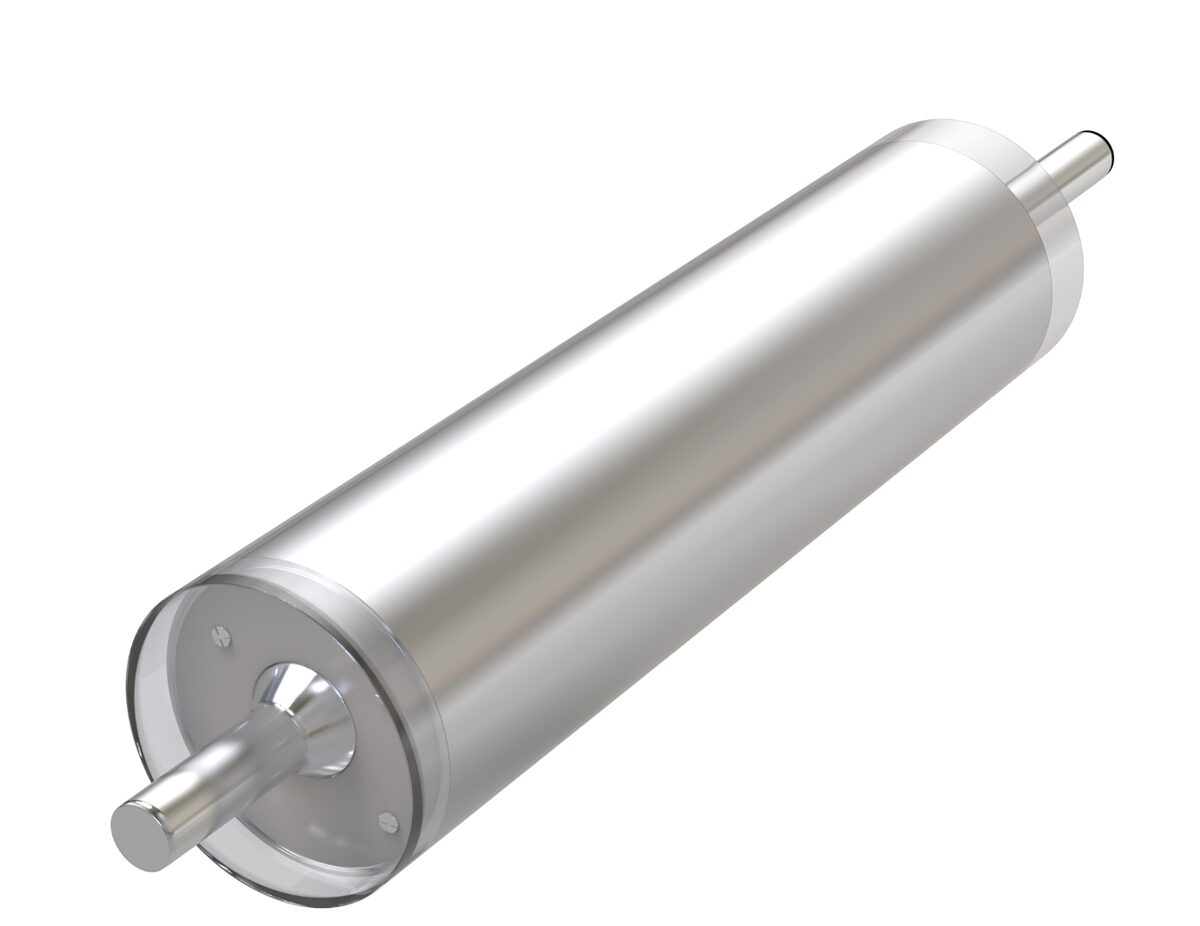
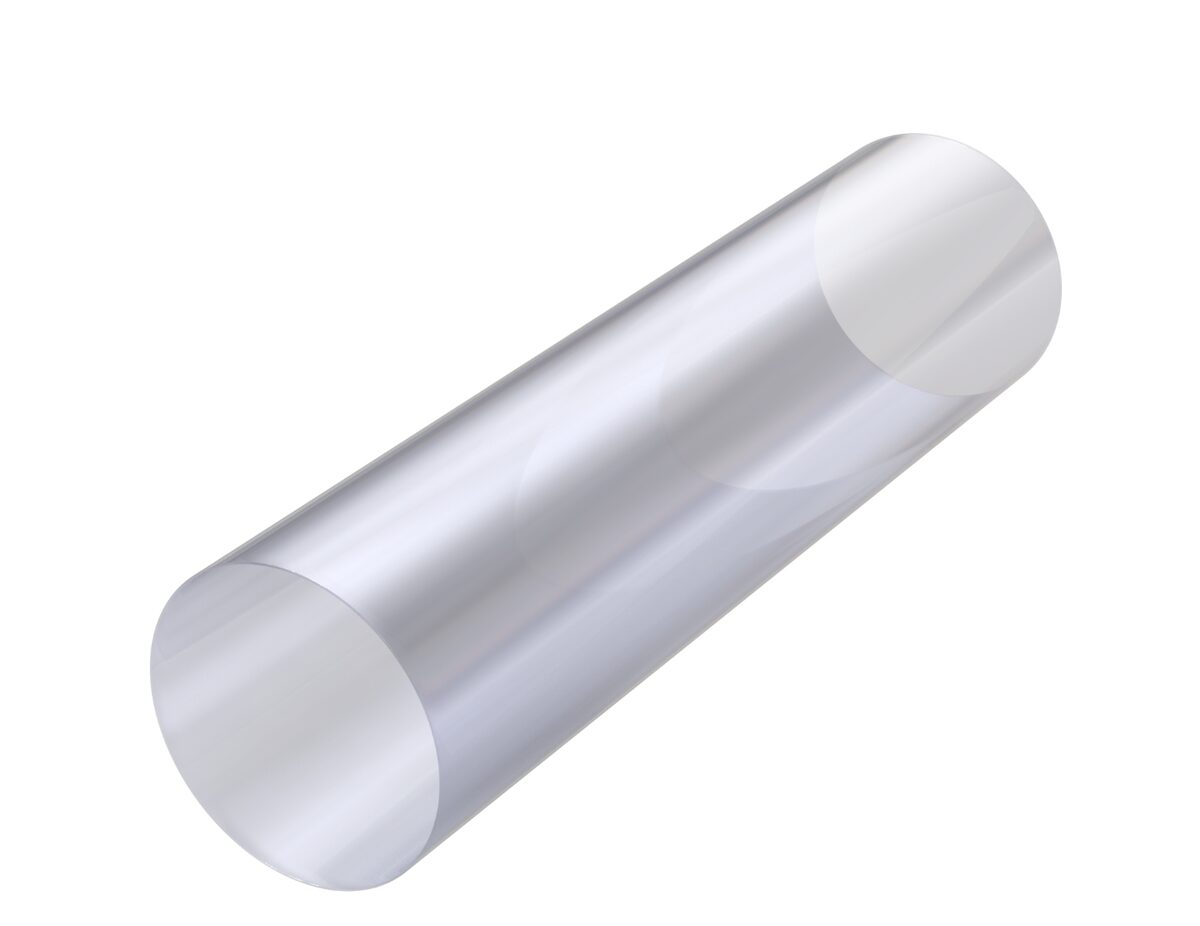
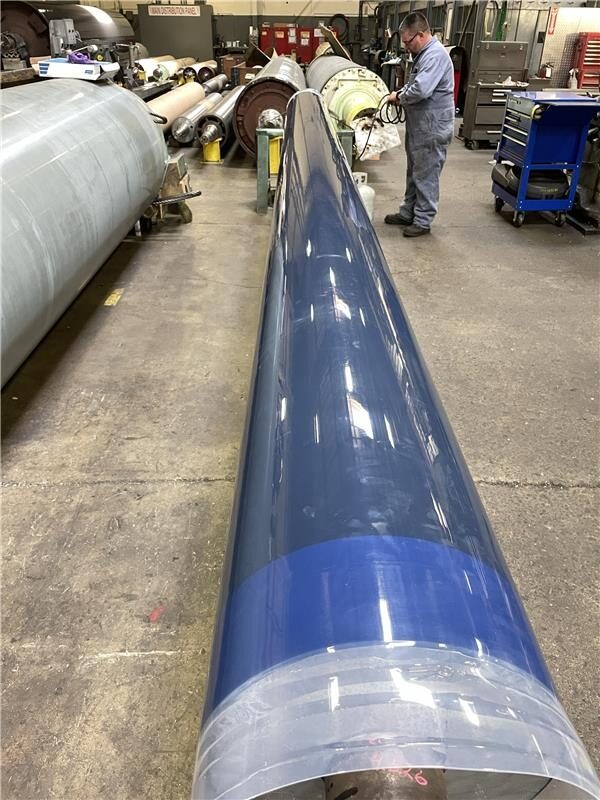
Clear FEP heat-shrink cover for visible-process rolls, size press, light coating, idlers, and laminating positions where release and ink/coating chemistry matter more than peak temperature.
PFA heat-shrink cover for calender rolls, high-temperature size press, food-contact lines, and flex-fatigue positions. Same install method as FEP, higher service temperature and chemical resistance.
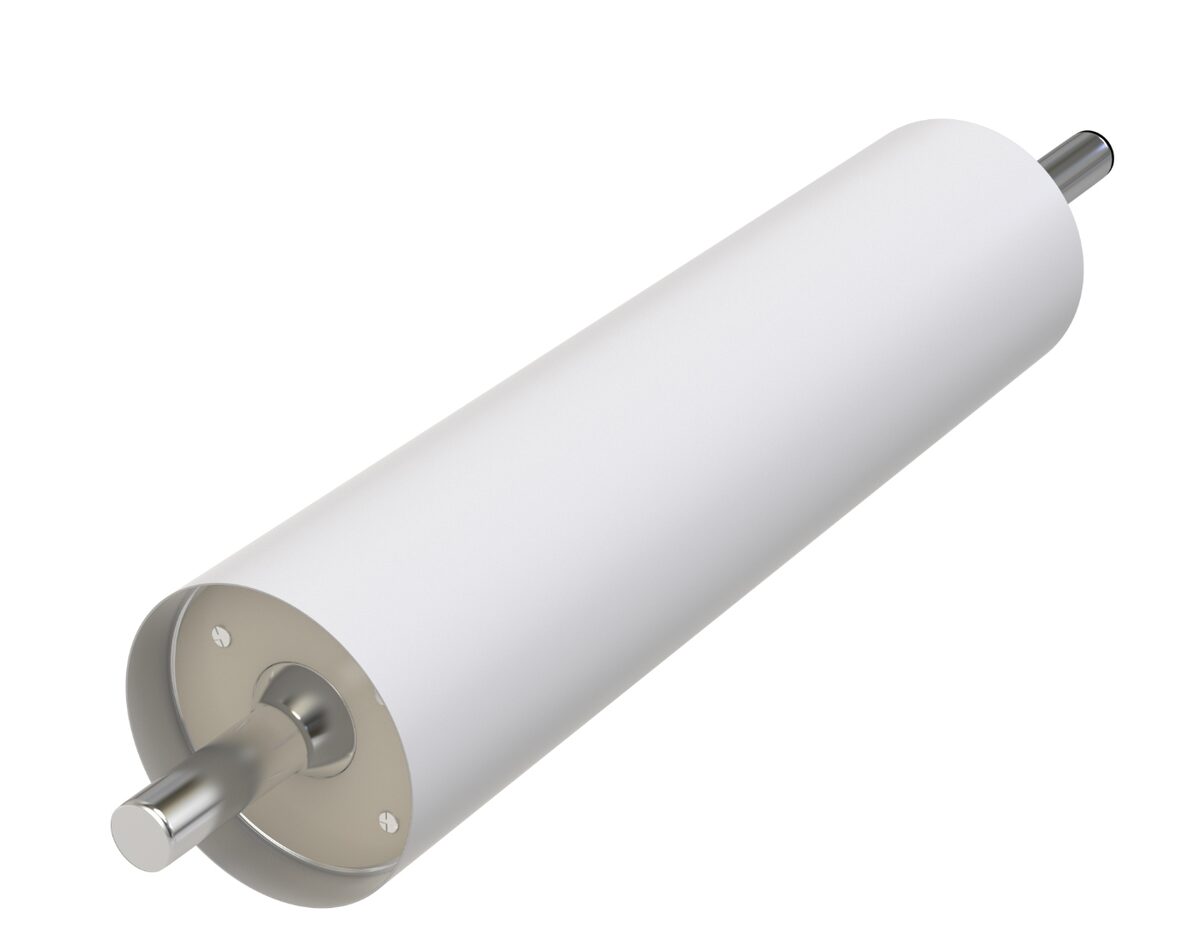
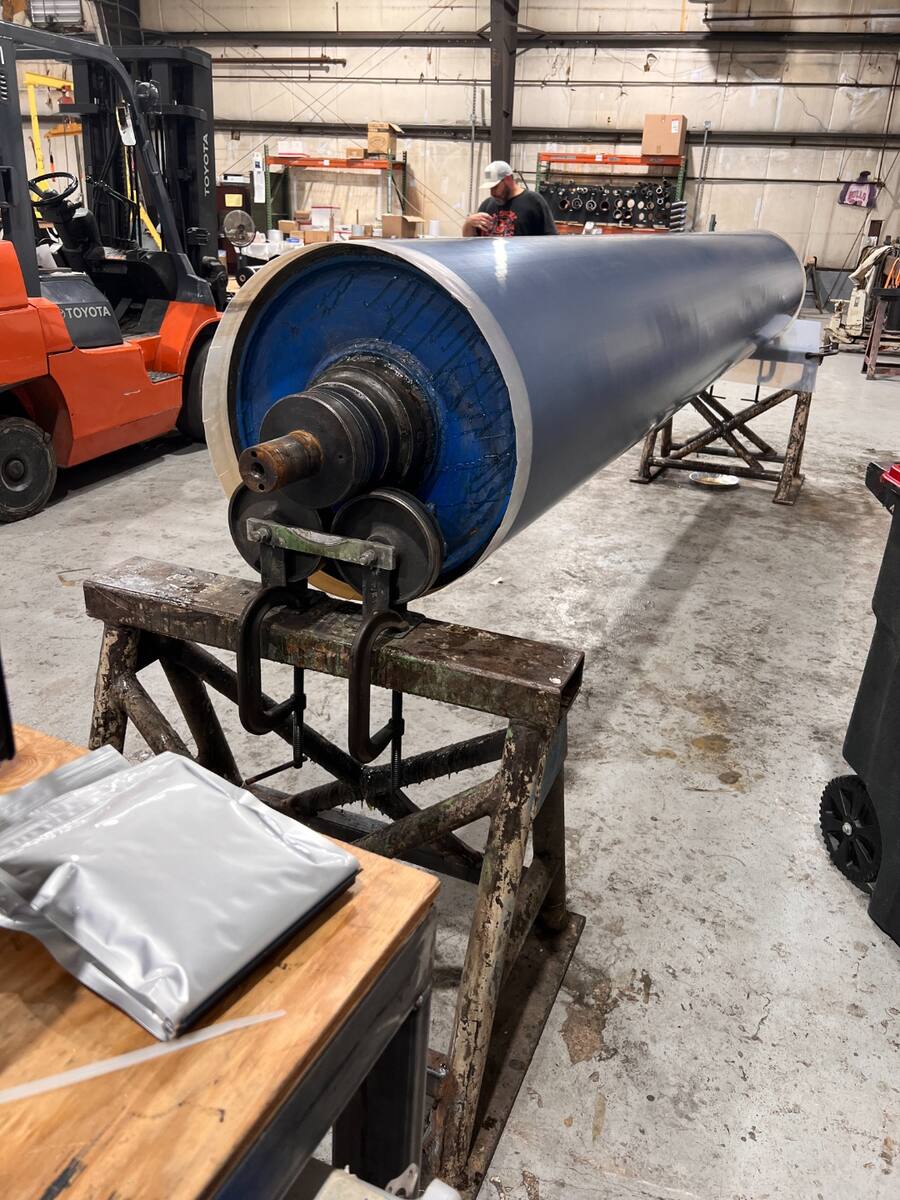
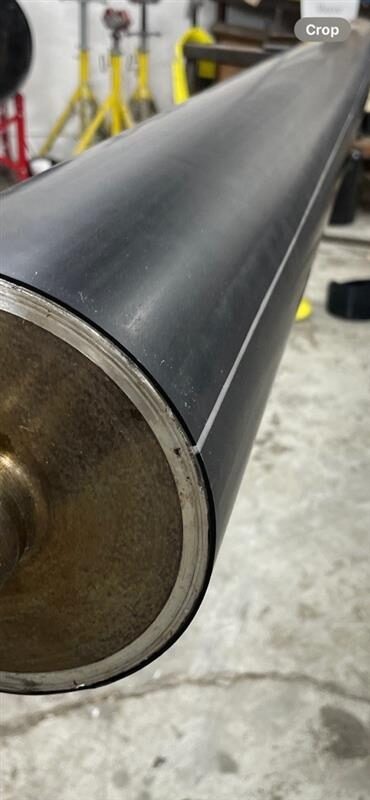
PTFE heat-shrink cover for spreader, guide, and calender rolls running under wear, fiber/fines, and dryer-area buildup. The workhorse Fluoron sleeve for demanding paper, converting, and packaging positions.
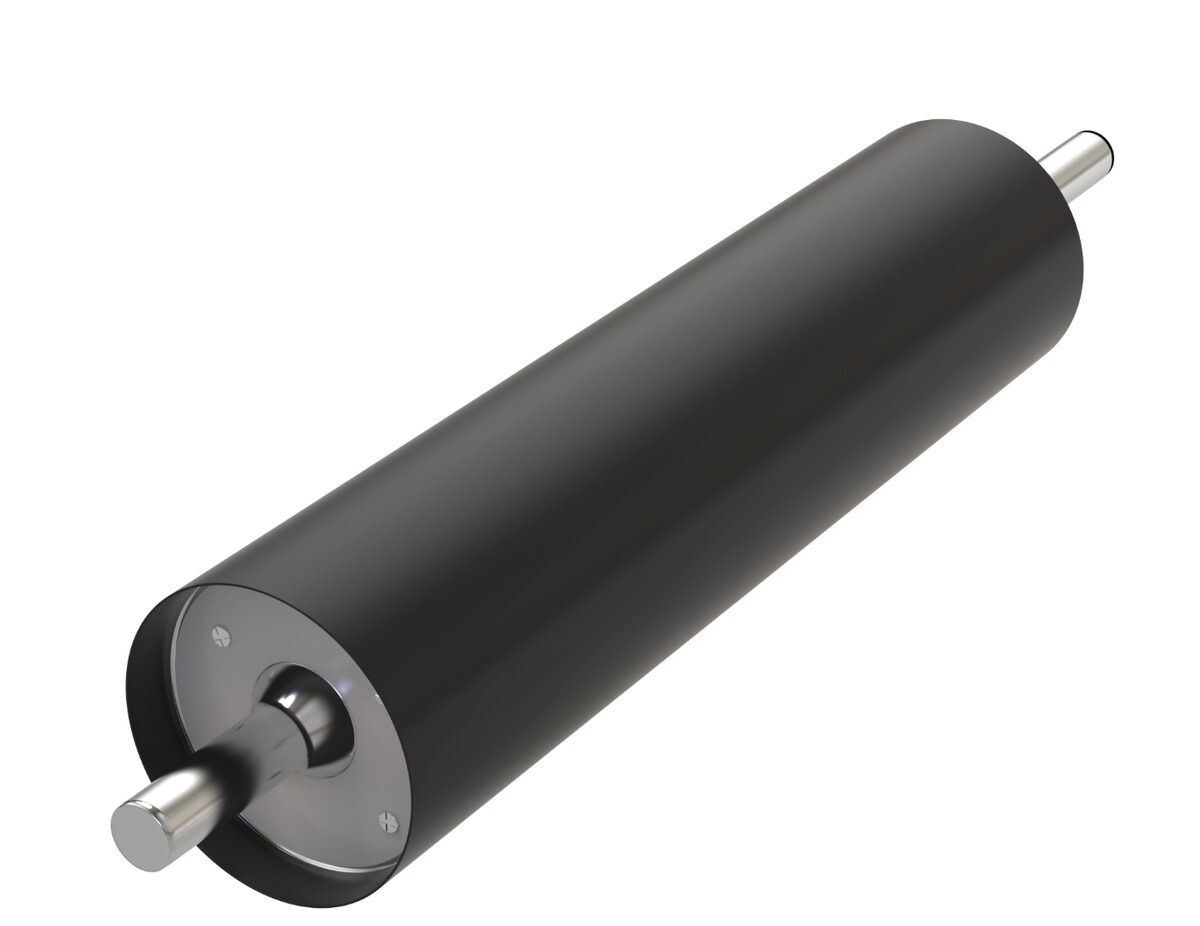
Conductive PTFE cover for dry-end rolls where static, web carryover, or charge buildup is the failure mode. Keeps PTFE non-stick release while bleeding off static through the roll body.
For paper-machine dryer cylinders we offer the OMS Dryer Sleeve as a sleeve path; many dryer-can applications are better served by an AEGIS coating, and Fluoron engineering will route accordingly from the intake.
FEP vs PFA vs PTFE vs conductive PTFE heat shrink roll covers
| Attribute | Fluoro-Clear (FEP) | Fluoro-Flex (PFA) | Fluoro-Wear (PTFE) | Fluoro-Stat (cond. PTFE) |
|---|---|---|---|---|
| Material | FEP — fluorinated ethylene propylene | PFA — perfluoroalkoxy alkane | PTFE — polytetrafluoroethylene | Carbon-reinforced conductive PTFE |
| Max service temp | 375°F / 190°C | 500°F / 260°C | 500°F / 260°C | 500°F / 260°C |
| Appearance | Clear / transparent | Translucent | Opaque white / off-white | Black / charcoal (conductive) |
| Construction | Seamless, up to 18 in. dia | Seamless, up to 18 in. dia | Seamed, 5 in. and up | Seamed, 5 in. and up |
| Static control | No | No | No | Yes — bleeds charge through the roll body |
| Best for | Visible-process rolls, size press, light coating, idlers, laminating positions where release matters more than peak temperature | Calender rolls, high-temp size press, food-contact lines, flex-fatigue positions | Spreader, guide, calender, dryer-area rolls under wear, fiber, or fines — the workhorse non-stick sleeve | Dry-end rolls where static, web carryover, or charge buildup is the failure mode |
| Install method | Heat shrink onto roll body | Heat shrink onto roll body | Heat shrink onto roll body | Heat shrink onto roll body |
| When to NOT pick this | Service runs above 375°F — step up to PFA or PTFE | Abrasion-limited positions — PTFE handles wear better | Static is the failure mode — use conductive PTFE | Pure release with no static issue — PTFE is cheaper |
Not sure which fits? Send dimensions and a description of the failure pattern through the Fluoron Spec tool and Fluoron engineering will route the recommendation within one business day.
Where heat-shrink fluoropolymer covers earn their keep
Lamination, coating, and tension rolls collect adhesive and ink residue that builds up between cleanings. FEP and PFA covers release the residue back to the web; conductive PTFE handles static-prone film positions.
Spreader, guide, size-press, and calender rolls in pulp and paper mills accumulate fiber, fines, starch, and pigment. PTFE (Fluoro-Wear) and conductive PTFE (Fluoro-Stat) replace the contact surface with a release-grade fluoropolymer.
Idlers, nip rolls, and chill rolls in converting and printing lines pick up ink and varnish. Clear FEP covers preserve visible process inspection; PFA handles higher-temp UV and EB cure sections.
FDA-grade PFA and FEP heat-shrink covers replace bare or rubber-covered process rolls in food lines so dough, glaze, and cheese release instead of building up. Standard CIP wash cycles are supported.
Hot-melt and water-based laminating lines build adhesive at the roll edges and inboard of the nip. PFA (Fluoro-Flex) covers handle the temperature and release; PTFE (Fluoro-Wear) is the answer when wear under the nip is the limiting factor.
How to know you actually need a heat-shrink fluoropolymer cover
A non-stick surface is the answer. FEP for moderate temperature and visible-process inspection, PFA when the position runs hot, PTFE when adhesive/coating chemistry is aggressive.
Indicates inadequate release at the roll surface. A fluoropolymer cover provides a much lower-energy surface so the substrate releases cleanly back to the web path.
Buildup that produces visible profile is a release problem. PTFE and conductive PTFE shed buildup between cleanings instead of holding it.
Cleaning frequency is the leading economic driver for a sleeve decision. A fluoropolymer cover typically extends the interval between cleanings by an order of magnitude.
Static at the dry end calls for conductive PTFE (Fluoro-Stat). It keeps PTFE-grade release while bleeding charge through the roll body.
Above 375°F / 190°C, FEP is out. PFA and PTFE both run to 500°F / 260°C; the choice between them comes down to seam, wear, and release chemistry.
PTFE (Fluoro-Wear) is the right family when abrasion is the limiting factor. For metal segmented rolls or canvas/felt rolls, a sleeve is not the right answer — engineering will route to an AEGIS coating or other path.
Canvas, felt, vacuum/suction, and many dryer-can positions are not sleeve candidates. The intake asks the right questions to route those to RCS cleaning or an AEGIS coating instead of quoting the wrong product.
Three install paths. One process.
Every Fluoron heat-shrink cover — FEP, PFA, PTFE, or conductive PTFE — installs with the same controlled-heat process. Bonding method depends on the fluoropolymer family, service conditions, and machine speed. The install path is independent of the material choice.
- Ship-in install at Fluoron — send the roll, we install and balance the cover, return ready to run.
- Onsite install at your plant — a Fluoron technician installs at the line during a planned outage.
- Customer install training — we train your maintenance team to install future covers in-house.
Heat-shrink fluoropolymer roll covers — common questions
Teflon™ is a Chemours trademark for PTFE-family fluoropolymers. Many buyers use “Teflon roll cover” as a search term when they’re looking for a non-stick fluoropolymer roll cover. Fluoron’s covers are fluoropolymer (FEP, PFA, PTFE, and conductive PTFE) heat-shrink sleeves, manufactured by Fluoron and not sold under the Teflon™ brand.
Seamless FEP and PFA covers up to 18 in. diameter. Seamed PTFE and conductive PTFE covers from 5 in., with no upper limit. Face length is roll-by-roll.
FEP runs to 375°F / 190°C continuous. PFA, PTFE, and conductive PTFE all run to 500°F / 260°C continuous. Peak excursions depend on dwell time and bonding method.
Service life depends on the position, contact pressure, web chemistry, and cleaning regime. Covers are a regularly-cleaned consumable, not a permanent surface; the right install plan keeps replacement scheduled rather than reactive.
Canvas and felt rolls aren’t sleeve candidates — we route to AEGIS surface repair plus an AEGIS XR coating. Many dryer-can positions are best served by an AEGIS coating; the OMS Dryer Sleeve is offered where a sleeve path makes sense.
Start with the Spec tool. It asks the roll, industry, and failure-pattern questions Fluoron engineering needs to recommend the right cover — or route the request to AEGIS / RCS if a sleeve isn’t the right answer.
Related Fluoron resources
Side-by-side comparison of Fluoro-Clear, Fluoro-Flex, Fluoro-Wear, and Fluoro-Stat.
Pick the polymer family by temperature, release, seam, and static.
Ship-in, onsite, and customer-install training paths for heat-shrink fluoropolymer covers.
Application briefs, capability statement, and PFAS positioning — downloadable PDFs.